
Relying on gut instinct is no longer enough to hire the right people. Recruitment metrics give HR leaders clear, measurable insight into every stage of the hiring process, from sourcing to onboarding. With real data, organisations can spot bottlenecks, benchmark recruitment efficiency performance, and demonstrate return on investment to senior leadership.
When you track the right recruitment metrics, hiring shifts from a cost centre to a strategic driver, supporting smarter decisions that align with business goals.
This guide breaks down seven essential metrics every employer should track, complete with benchmarks and formulas.
Why Recruitment Metrics Matter More Than Ever
The role of data in modern hiring
Metrics offer an objective lens through which you can evaluate every aspect of your hiring funnel, moving beyond intuition to make strategic, evidence-based choices. They provide the hard numbers needed to tell a compelling story about your recruitment efforts, successes, and challenges.
Challenges HR leaders face without clear metrics
Without clear metrics, HR leaders are often left working in the dark, under pressure, with little visibility. It becomes harder to explain budget needs, fix process issues, or understand why top candidates are dropping out. This reactive way of working costs time and money, and increases the risk of hiring the wrong people, damaging productivity and morale.
How metrics improve decision-making and ROI
Metrics speak the language of the C-suite. When you present hiring performance in numbers, trends, and outcomes, you build credibility and show clear accountability. Tracking key performance indicators (KPIs) allows you to prove the return on investment (ROI) of your recruitment efforts, positioning HR not as a cost centre, but as a strategic partner that contributes directly to business success.
The 8 Essential Recruitment Metrics to Track
1. Time to Fill
-
Definition: Time to Fill measures the total number of calendar days from when a job requisition is formally approved to the moment a candidate accepts the offer. It is a crucial measure of your internal process efficiency.
- Formula: Time to Fill = Offer Acceptance Date - Requisition Approval Date

- Industry benchmarks: The Society for Human Resource Management (SHRM) reports an average Time to Fill of 42 to 54 days. A prolonged timeline can mean losing top candidates to more agile competitors. Some roles can take longer, for example, At Konnekt, we see that the average Time to Fill technology roles in Malta is three months. Also, if you choose to hire Third County Nationals, remember that a work permit can take 8-12 months to be issued. Therefore this would need to be factored into your pre-established time-lines.
2. Cost per Hire
-
What’s included in the calculation: This metric calculates the total investment required to hire a new employee. A comprehensive calculation includes all internal and external expenses.
- Formula: Cost per Hire = (Total Internal Recruiting Costs + Total External Recruiting Costs) / Total Number of Hires
- Internal Costs: Recruiter salaries, recruiter and hiring manager’s time spent in interviews, employee referral bonuses.
- External Costs: Agency fees, job board advertising, technology subscriptions, relocation costs.

- Why it's critical for budgeting: Tracking Cost per Hire allows you to manage your recruitment budget effectively, optimise spending, and justify investments in high-value channels or technology.
3. Quality of Hire
-
Measuring performance, retention, and fit: Quality of Hire is arguably the most important metric, as it measures the long-term value a new employee brings to the organisation. It’s a composite metric, typically assessed 6-12 months post-hire, that combines several indicators:
- Performance review scores
- First-year retention rate
- Hiring manager satisfaction
- Pre-hire vs. post-hire quality indicators: You can predict quality with pre-hire indicators like structured interview performance and skills assessment scores. Post-hire indicators like on-the-job performance and retention then validate the success of the hire.
4. Source of Hire
- Identifying top-performing channels: This metric tracks where your successful candidates are coming from, whether it's job boards, your company careers page, employee referrals, or recruitment agencies. By layering this with cost and quality data, you can determine the true ROI of each channel and allocate your budget to the sources that deliver the best talent most efficiently.
5. Candidate Experience Score
-
Importance of NPS-style surveys: The Candidate Net Promoter Score (cNPS) is a simple yet powerful way to measure how candidates perceive your hiring process. It’s based on one question: "How likely are you to recommend applying for a job at our company to a friend or colleague?"
- Formula: cNPS = % Promoters - % Detractors

- Impact on employer brand: A single negative candidate experience can damage your employer brand. Conversely, a positive experience, even for rejected candidates, can create brand ambassadors and build a sustainable talent pipeline for the future.
6. Offer Acceptance Rate
-
Reasons candidates decline: This metric is a direct reflection of your competitiveness. A low Offer Acceptance Rate can signal that your compensation packages may not align with the market, your hiring process is too slow, or competitors are making more compelling offers.
- Formula: Offer Acceptance Rate = % Offers Accepted / Offers Issued

- How to improve acceptance with better engagement: To improve this rate, benchmark your salaries and benefits against the market, have the salary range you can negotiate within pre-approved range in order to accelerate the offer process, and personalise the offer to reinforce why the candidate is your top choice. Beyond salaries, look at other reasons for declining an offer. In Malta, we've noticed that lots of offers have been turned down lately because of a lack of flexibility, as candidates now prefer remote or hybrid jobs.
7. Turnover Rate by Source or Department
-
Why retention starts at hiring: High turnover in the first year is a costly red flag that often points to a flawed hiring decision or a mismatch between the expectations set during the recruitment process and the reality of the role.
- Using data to pinpoint problematic sources: By segmenting your first-year turnover data by the original source of hire, you can identify if certain channels are consistently delivering candidates who are not a good long-term fit. This insight allows you to re-evaluate if the job advert targeted the right people or if you need to use alternative channels to support your hiring process.
Tools That Simplify Tracking Recruitment Metrics
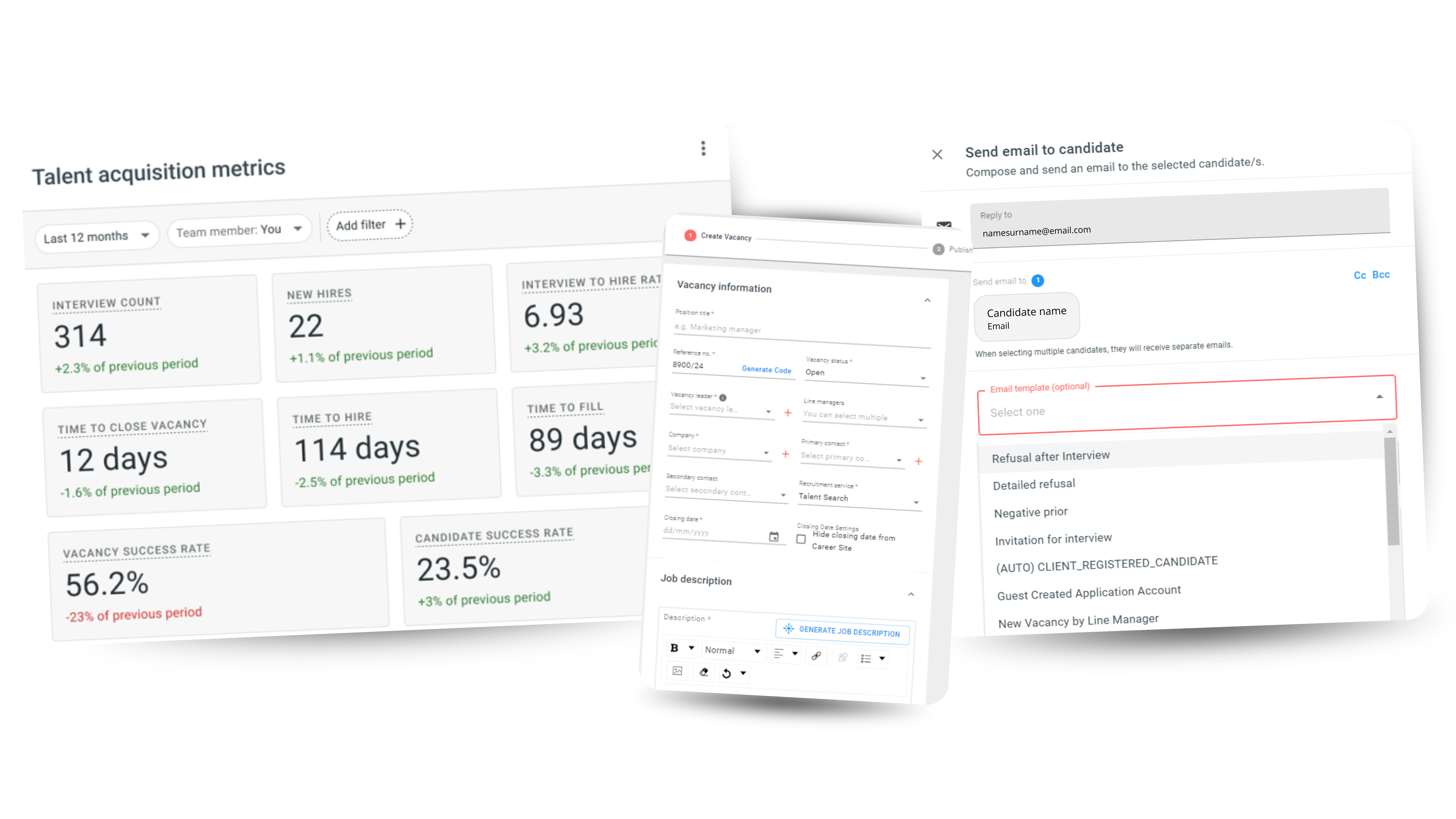
Manually tracking these metrics in spreadsheets is inefficient and prone to error. A centralised platform like Talexio acts as a single source of truth, consolidating all candidate data, team communications, and analytics into one intuitive dashboard.
The greatest advantage of an integrated system is access to real-time insights. Dashboards allow you to monitor your KPIs continuously, enabling you to make agile adjustments to your strategy and address potential issues before they impact your hiring goals.
Final Thoughts
Tracking recruitment metrics isn’t optional anymore, it’s essential for building a strong, sustainable hiring strategy. A data-led approach helps HR teams make smarter choices, cut costs, raise hiring quality, and show their impact on the business. The numbers matter, but what you do with them matters more. Use them to tell a clear, confident story about the value you bring.
Need help hiring talent? Get in touch with Konnekt to see how our recruitment services can support your business goals.
Author: Rebecca Naudi, Recruitment Consultant at Konnekt